Most of the computers we use in our homes or in our offices run on Windows, which is very user-friendly; and it is easy to adapt, nearly around 90% of the computers run on Windows. But some people prefer Linux, which is open-source, highly secure, and highly privacy-focused. There are multiple distributions (different versions of Linux built by various developers or organizations) available on the internet, and people choose the OS depending on their needs and custom install them on their computer.
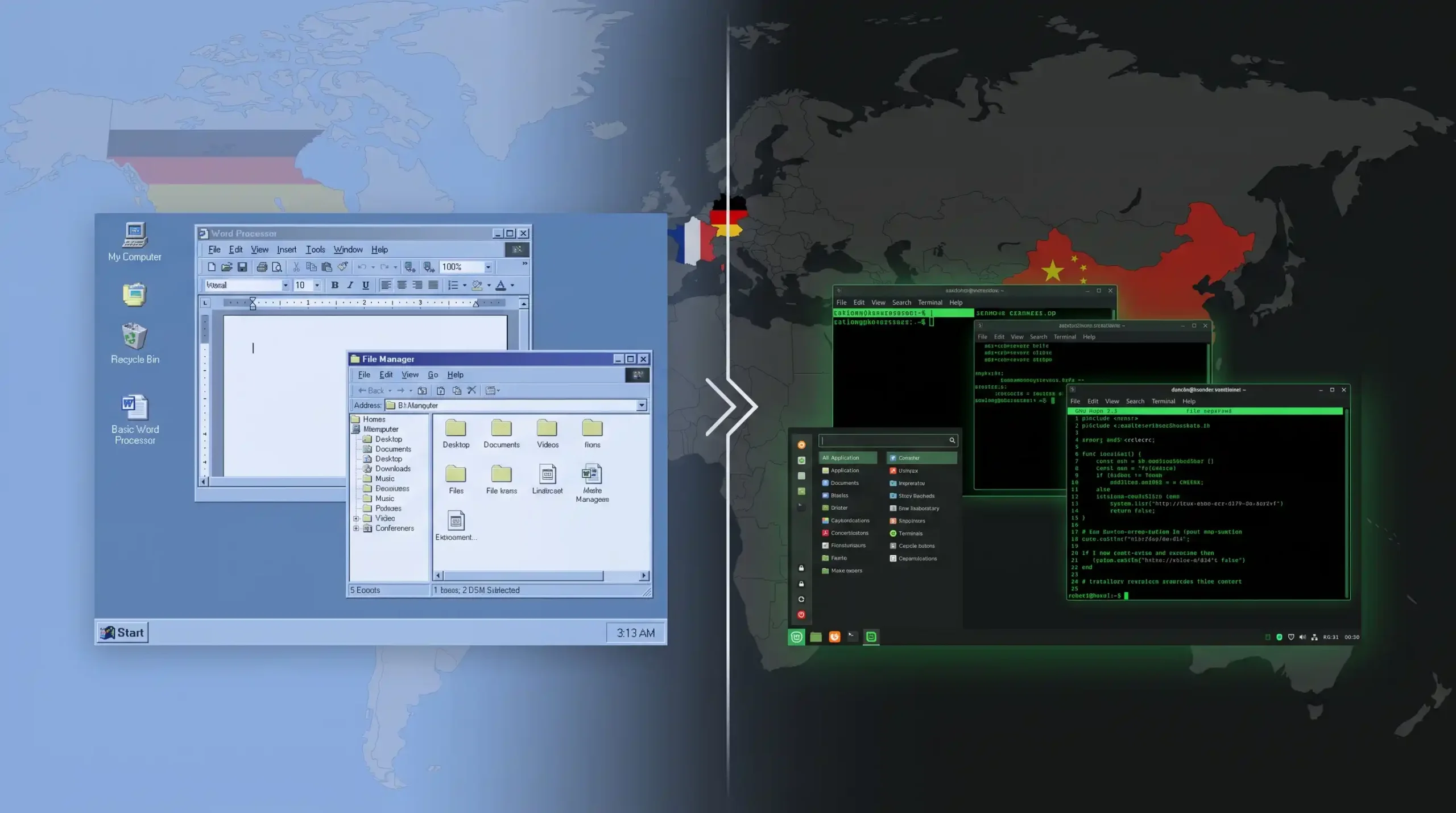
The famous distributions are Linux Mint, Ubuntu, Fedora, Kali Linux, and many more. Now people are slowly changing their preference from Windows to Linux. Like this, some governments around the globe have also tried to go with Linux by ditching Windows. European countries like Germany have been using Linux for a very long time, and France has also joined this revolution recently. Now, China has ordered several government agencies to move from Windows to Chinese-made Linux distributions because of the privacy concerns over their data.
Before, China was using a Windows OS which was developed by Microsoft and a China-based company called CMIT, which is a state-owned Chinese electronics technology group. Both Microsoft and this company have combinedly developed this OS based upon the Chinese requirements. Now, totally, they are changing their entire environment from Windows OS to Linux, and the shift is real.
Interestingly, this isn’t just industry speculation — Bloomberg reported that the order came from the top, with some coverage pointing to China’s Ministry of State Security as the driving force. The move also pushes up the retirement of the Windows 10 China Government Edition from February 2027 to late 2026. Two homegrown distros are expected to take over: Kylin OS, built by Kylin Software for government and enterprise use, and UnionTech OS (UOS), developed by Tongxin Software on top of the Debian-based Deepin. For context, CMIT itself goes back to a 2016 joint venture between Microsoft and the state-owned China Electronics Technology Group, which is what built that China Government Edition in the first place.
Microsoft, when asked by Bloomberg, said it wasn’t aware of any security incident tied to that edition. That said, don’t expect Windows to disappear from China overnight — as of July 2026, it still made up around 87.6% of desktop web traffic there, according to StatCounter, so this is very much a government-level shift for now, not a consumer one.